Wall Street banks recover in China amid trading boom
Financial Times is reporting a recovery in China activity for U.S. bulge brackets — titling it "Wall Street banks recover in China amid trading boom." The mechanism, not the headline, is what matters…
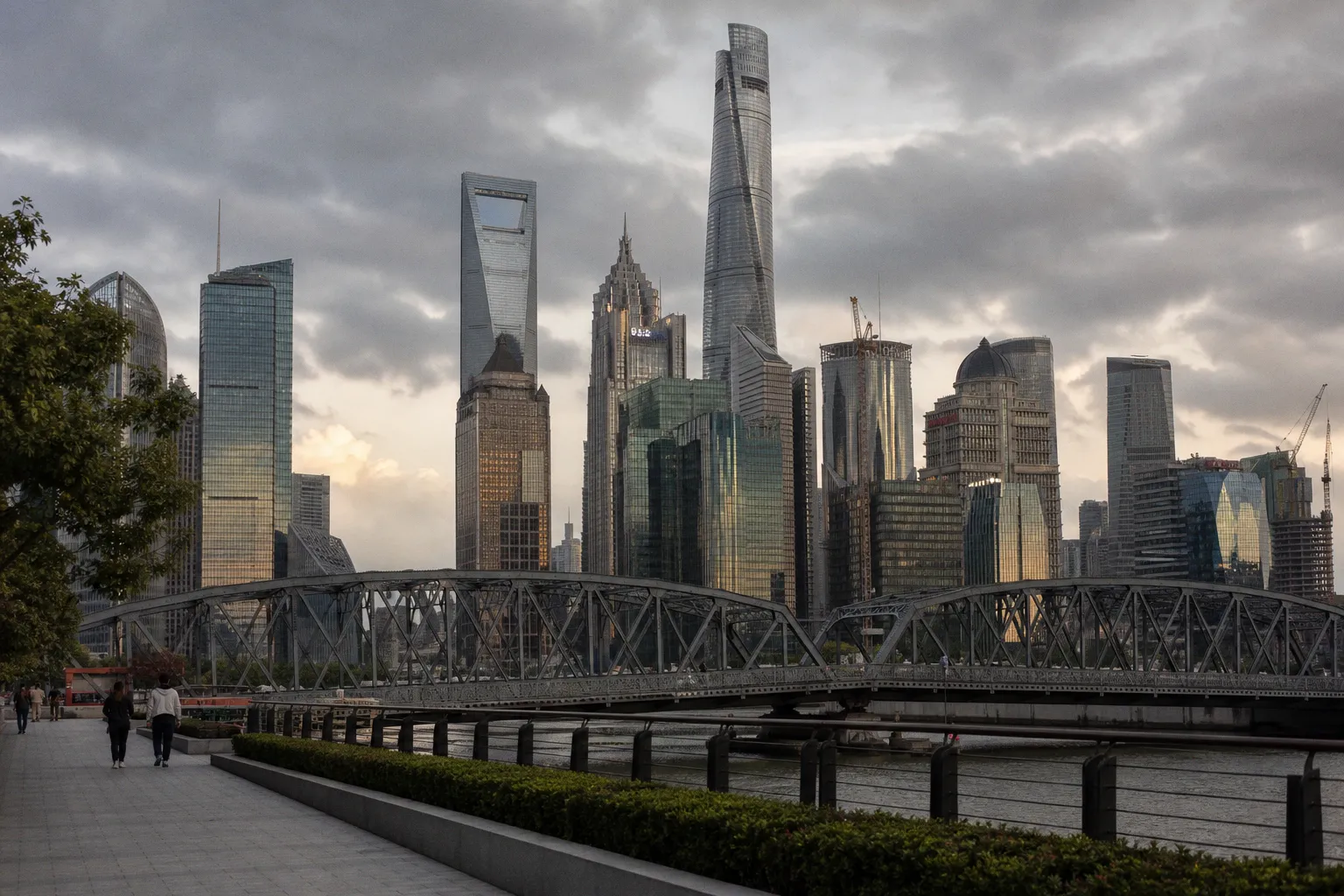
Financial Times is reporting a recovery in China activity for U.S. bulge brackets — titling it "Wall Street banks recover in China amid trading boom." The mechanism, not the headline, is what matters to a hedge fund audience: trading-desk P&L is a function of volume times margin per trade, and the two components behave very differently across cycles. A volume-driven rebound in flow products is cyclical and replication-friendly; a rebound in capital-intensive lines — FICC warehousing, ECM underwriting, prime brokerage balance-sheet commitment — is sticky.
Recovery, not re-engagement
The title's framing — recovery, not expansion — lines up with the harder data in the Business Times' coverage of the ASIFMA/KPMG survey of 34 cross-border financial firms. Roughly two-thirds of respondents still plan APAC expansion over the next three years. Where they deploy has moved. South Korea's expansion interest jumped to around 50% of firms from 21% a year earlier, catalyzed in part by a road map toward WGBI inclusion and a long-undervalued equity bid. China sits at approximately 40%, steady from earlier peaks but well below its pre-2022 trajectory.
The constraint set on China is unchanged: capital controls, data rules, geopolitical exposure. ASIFMA chief executive Peter Stein characterizes Singapore's sustained draw as a function of "multipolar geopolitical positioning" — diplomatic shorthand for clienteles that refuse single-bloc tagging. On onshoring, the Chinese mainland "continues to drift lower" per ASIFMA, with firms still uncertain about their long-term China exposure. The recovery in trading volumes and the stickiness of the expansion constraint are not contradictory; they reflect different time horizons and different capital allocations.
Two readings of the headline
- Flow-led rebound, concentrated in cash equities, futures, and swap flow: low margin-per-trade, high sensitivity to realized volatility regimes. A retracement in cross-border flow unwinds the print within quarters.
- Capital-led rebound in underwriting and balance-sheet commitment: higher signal-to-noise. Would imply banks are pricing geopolitical and regulatory friction as compressed but manageable, and committing risk capital on a 12–24 month horizon.
Until the FT reporting disaggregates which mix is moving, the headline is descriptive, not diagnostic. The structural read is bound to the product mix, not the trade-count tally.
What to verify
- Disaggregation of the China rebound by product line (flow vs. capital-intensive). The shape of the recovery is the trade, not the level.
- WGBI inclusion timeline for South Korea and the resulting reweighting in global bond benchmarks — already a survey-cited catalyst and a non-trivial execution event for fixed-income managers.
- Any further slippage in the ~40% China expansion reading, which would corroborate ASIFMA's noted drift rather than a real repatriation of foreign capital.