Screen Carbon Offset Credits for Portfolio Hedging
Last quarter, a long-standing client walked into our review meeting and asked, with real expectation in her voice, why we hadn't built a carbon credit sleeve into her portfolio.
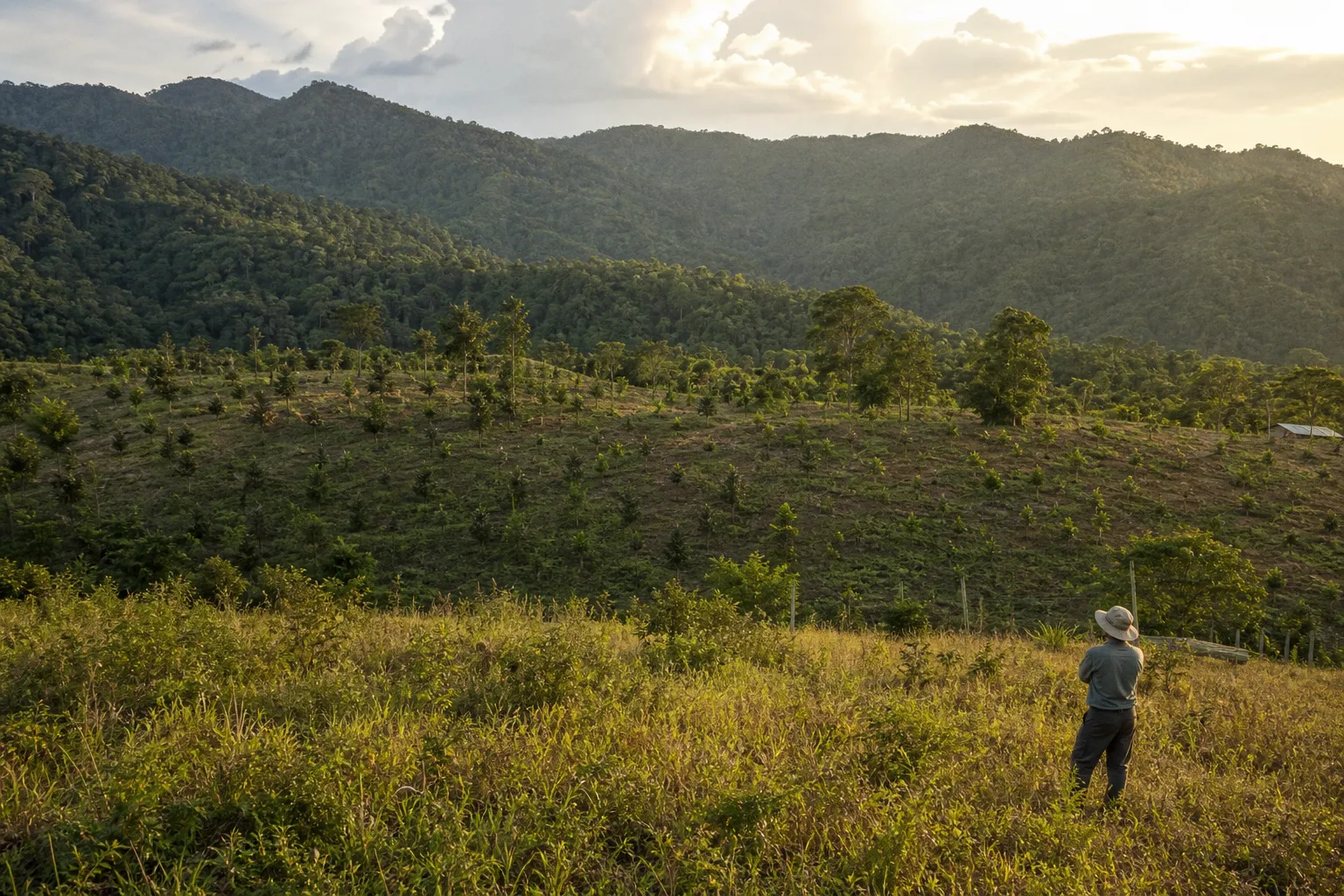
Screen Carbon Offset Credits for Portfolio Hedging
Hedge funds and private wealth platforms are not buying offsets because they love forests. They are buying them because the strategic logic has shifted: transition risk now lives inside valuation models, regulators in the EU, UK, Singapore, and California are forcing climate disclosure that includes financed emissions, and clients with multi-decade horizons want to see a credible bridge between today's emissions and tomorrow's targets. The challenge is that the voluntary carbon market remains fragmented, opaque in pricing, and — frankly — uneven in quality. Generic "high-integrity" claims are not enough. What we owe clients is a documented screening process that holds up to the same standard as our credit or equity due diligence.
In our practice, we treat carbon credits the way we treat any other alternative asset class: with a written thesis, a documented underwriting standard, and a clear understanding of what they can and cannot do for a portfolio.
Navigating the Voluntary Carbon Market: Beyond Standardized Ratings
The voluntary carbon market is not one market. It is a stack of registries, methodologies, project types, vintages, and price tiers that confuse even seasoned allocators. When a fund manager hears "Verra" or "Gold Standard," they often assume a single seal of approval — the way a credit rating functions for corporate bonds. That assumption is the first thing we have to retire in client conversations. Standards set the methodology; project-level performance, governance, and additionality determine actual quality. Two reforestation projects sitting under the same Verra Verified Carbon Standard (VCS) umbrella can carry radically different risk profiles, and pricing reflects that spread.
The four standards that dominate our screening work are Verra (VCS), Gold Standard, the American Carbon Registry (ACR), and the Climate Action Reserve (CAR). Each was built with a different lens — Gold Standard leans heavily on sustainable development co-benefits, CAR is concentrated in North American protocols, ACR has become a home for innovative methodology pilots, and Verra is by volume the largest, which is both a strength and a warning sign for us. A high volume of credits does not equal a high share of high-integrity credits.
| Parameter | Verra (VCS) | Gold Standard | ACR | Climate Action Reserve |
|---|---|---|---|---|
| Primary geographic focus | Global | Global, with strong emerging-market presence | North America, expanding globally | United States (especially California) |
| Methodology breadth | Broadest, hundreds of methodologies | Moderate, with strong renewable energy and community project focus | Broad, including novel and pilot protocols | Narrow, deep on U.S. compliance-grade protocols |
| Co-benefit emphasis | Variable by project | High — explicit SDG linkage | Moderate | Low to moderate |
| Typical project types | Forestry, renewables, cookstoves, blue carbon | Renewables, energy efficiency, land use | Forestry, methane, novel removals | Forestry, livestock, mine methane, rice |
| Volume in market | Largest | Significant | Growing | Compliance-anchored, smaller VCM share |
The table is not a ranking. It is a tool we use to ask the next question: which of these standards produced the credit sitting in front of us, what methodology version was used, and when was it last updated. Methodology version matters as much as the standard itself, because carbon accounting protocols have tightened materially since 2021, especially around additionality testing and buffer pool sizing for nature-based projects.
Applying the ICVCM Core Carbon Principles to Asset Allocation
In 2023, the Integrity Council for the Voluntary Carbon Market released the first set of Core Carbon Principles (CCPs), and in our conversations with institutional allocators this has become the closest thing to a shared screening language the market has. The CCPs are not a standard — they sit above the standards and act as a quality threshold. If a credit or a credit category passes the CCP assessment, it carries a baseline level of integrity around additionality, permanence, robust third-party verification, and unique issuance. If it does not, we treat the underlying credit as ineligible for a hedging mandate that will be reported against TCFD or ISSB frameworks.
For a hedge fund allocator, the practical application looks like this. We start with the CCP-eligible category list the Integrity Council publishes, then we layer in our own fund-level restrictions — exclusions around specific project types, vintage floors, geographic caps, and concentration limits. A reforestation credit from a jurisdiction with weak land tenure enforcement, for example, can pass the CCP test at category level and still fail our internal screen on reversal risk. The CCPs are the gate; our overlay is the underwriting.
This is also where fiduciary reality starts to bite. When we sit down with a client who wants to allocate to carbon as a hedge, we walk them through two questions. First: what climate-related financial risk are you actually hedging — physical risk on a real-asset holding, transition risk on a concentrated equity book, or reputational risk associated with financed emissions disclosures. Second: do you understand that a credit which fails CCP-style screening may still move in price, but it will not move in price in a way that your auditor or regulator will accept as a genuine offset. The answer to question two typically forces a smaller, more disciplined allocation — which, in our experience, is the right outcome.
Quantifying Additionality and Permanence in Nature-Based Assets
Two criteria do most of the work in our screening process: additionality and permanence. They sound technical, but in a client meeting they translate into two plain questions. Additionality asks: would this emissions reduction have happened without the carbon credit revenue. Permanence asks: if the carbon is stored in a tree, a wetland, or a geological formation, what is the realistic probability it stays there for the duration we are claiming.
Additionality is the screening criterion most often misreported. A project that is already profitable, or that is mandated by local regulation, or that is the cheapest available option regardless of carbon finance, fails the additionality test. We have seen forestry projects in regions with strong timber markets where the financial return on the wood alone justified the planting — and where the carbon credit is, in effect, a bonus stream layered on a business-as-usual decision. Those credits price, but they do not represent real additional tonnes, and that is exactly the kind of exposure that breaks in a stress scenario when the regulator or the client's auditor asks for the underlying emissions reduction claim.
Permanence is where nature-based solutions require the most careful underwriting. Forestry projects are typically expected to store carbon for 40 to 100 years, depending on the project design and the buffer pool allocation. The risk is not just wildfire or illegal logging — it is also land tenure change, political risk in the host jurisdiction, and the gradual erosion of project governance as the original developer moves on. A non-permanence buffer pool is the standard mitigation, but buffer pools are not a free option: they consume issuance, dilute the volume available for sale, and they assume the buffer itself is held to a high-integrity standard. We ask every nature-based credit sitting in our hedging sleeve to disclose buffer pool size, governance, and the historical loss rate the buffer is calibrated against.
For engineered removals — biochar, direct air capture, mineralisation — permanence risk drops sharply and additionality risk rises. The technology is real, the storage is durable, and the project economics often depend entirely on the carbon credit. That dependence is what makes additionality relatively easy to demonstrate, but it also makes pricing volatile, supply scarce, and project-level diligence intensive. When we balance a hedging sleeve, we typically pair lower-permanence nature-based credits with higher-permanence engineered removals, accepting lower volumes in the engineered bucket in exchange for durability.
Mitigating Leakage and Reversal Risks in Long-Term Hedging Strategies
Leakage is the criterion clients rarely hear about until we raise it, and it is the one that, once explained, changes how they think about a credit's contribution to a portfolio hedge. Leakage is the displacement of emissions: a project protects a forest in one location, and the economic activity that was driving deforestation simply moves to a neighbouring jurisdiction. The original tonnes are real, the displaced tonnes are real, and the net climate outcome is smaller than the headline figure on the certificate. Screening for leakage means asking whether the project boundary is realistic, whether the activity baseline is appropriately conservative, and whether the methodology includes a leakage deduction at issuance.
Reversal risk is the second half of the same conversation. For nature-based assets, the question is whether the carbon stored at the start of the crediting period is still stored at the end — and beyond, into the duration we are claiming. A wildfire in a boreal forest, a drought in a tropical wetland, a change in government in a country hosting a large-scale REDD+ project — all of these can erase stored tonnes and convert a credit that looked like a 30-year hedge into a one-year holding. We treat reversal risk as a probabilistic overlay, not a binary flag, and we size positions in nature-based credits to reflect the distribution of outcomes rather than the expected case.
For funds building multi-year hedging strategies, the operational discipline is unglamorous and indispensable. We run a quarterly review of every credit in the sleeve: vintage, registry status, project-level news, buffer pool movements, and any verification update. When a project's risk profile changes — a new government, a boundary dispute, a methodology revision — we re-underwrite. A credit that passed the screen at purchase can fail the screen at rebalance, and our clients expect us to act on that signal rather than hold to maturity for accounting convenience. This is also where the broader work of climate risk portfolio analysis connects back to the credit sleeve: a holding that looked like a hedge against transition risk on a European utility book can quietly become a concentrated jurisdictional exposure if too many credits cluster in a single host country.
Leveraging CCQI Scoring for Comparative Credit Analysis
The Carbon Credit Quality Initiative (CCQI) scoring tool has become the spreadsheet of choice in our screening process, and we use it the way a fixed-income desk uses a curve: as a comparative overlay, not a verdict. The CCQI scores different carbon credit project types against a standardized set of criteria, which lets us compare an avoided-deforestation credit from one registry with a cookstove credit from another, or a blue carbon project against a soil-sequestration programme. The score is not a buy recommendation. It is a way to ask whether our internal view of a credit's quality is consistent with the broader market's view of its project type.
In practical terms, the CCQI helps us in three places. First, it gives us a defensible reference point when a client asks why we excluded a particular project type from a hedging sleeve — "the CCQI score for this category sits below our threshold, and the underlying drivers are governance and reversal risk" is a clearer conversation than a private opinion. Second, it supports vintage decisions: we use the scoring framework to differentiate between older vintages issued under looser methodologies and newer vintages issued under tighter protocols, which directly affects how we size a position. Third, it gives the operational team a shared vocabulary when reviewing project documentation, which is not a small thing when you are screening hundreds of credits across multiple strategies.
A screening framework is only as strong as the team's ability to read a verification report in 20 minutes and know what to flag — which is why we invest in training analysts who can move between registry language, audit findings, and portfolio-level risk without translation.
A Practical Framework Advisors Can Apply This Quarter
When we distil the process for advisors facing their own clients, it comes down to five steps that can be operationalised inside any private wealth or fund platform without a dedicated carbon desk.
1. Define the hedge target. Write down, in one paragraph, what climate-related financial risk the credit sleeve is meant to address — physical risk, transition risk, or financed-emissions exposure — and against which holdings.
2. Adopt a written screening standard. Use the ICVCM Core Carbon Principles as the gate, add a fund-level overlay for project types, vintages, geographies, and concentration, and document the standard in the IPS or mandate.
3. Score project types before scoring projects. Use the CCQI framework to set category-level thresholds, then run project-level diligence against the standard's methodology, additionality tests, and buffer pool design.
4. Stress-test for leakage and reversal. Model a 20–30% impairment scenario on the nature-based portion of the sleeve and confirm the portfolio-level hedge survives the shock.
5. Rebuild the sleeve quarterly. Treat the credit book like a trading book: review vintage, registry status, project news, and verification updates, and re-underwrite on a fixed cycle.
The temptation, especially in client conversations, is to promise more than the instrument can deliver. Carbon credits do not replace decarbonization of the underlying portfolio. They do not guarantee a hedge against every climate-related financial risk. And a credit sitting under a respected standard is not automatically a high-integrity credit — project-level due diligence is the part that cannot be outsourced to a label. What a well-screened credit sleeve can do, in our experience, is give a client a defensible bridge between today's emissions profile and tomorrow's target, while giving the advisor a documented process that will hold up to fiduciary review, regulatory disclosure, and — perhaps most importantly — the client who reads the fine print.
That is the work. It is not glamorous, it does not fit on a single slide, and it will not be solved by a rating. But for advisors and allocators willing to put the framework in writing and the discipline in the calendar, the voluntary carbon market stops being a reputational gamble and starts behaving like an alternative asset class — with a thesis, a screen, and a clear line on what the credit is for.