Morgan Stanley beats estimates on strong trading and dealmaking, bets on AI investment
The crucial earnings metric is missing from the available reporting. That matters more than the headline: Reuters says Morgan Stanley beat estimates on trading and dealmaking strength and is backing…
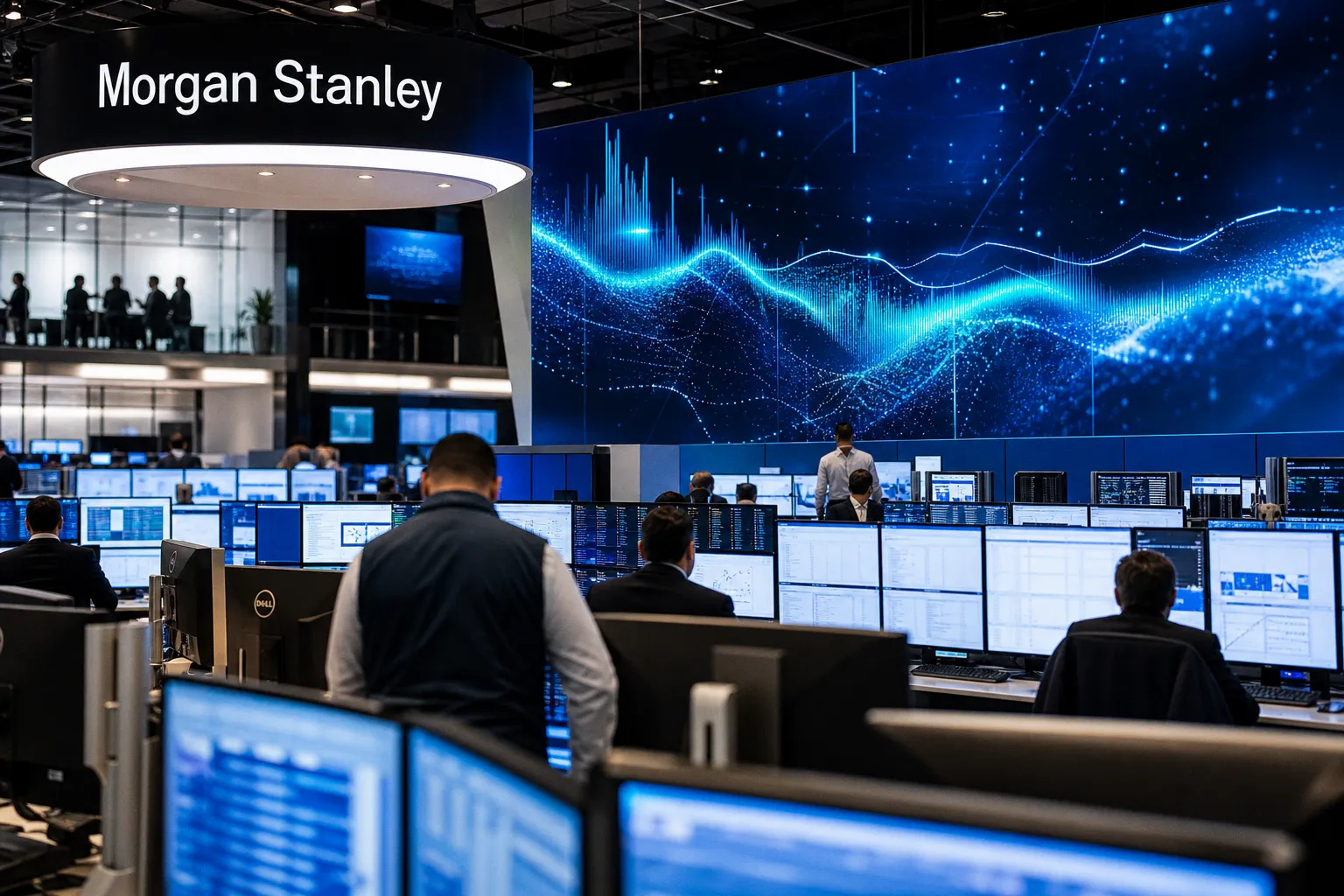
The crucial earnings metric is missing from the available reporting. That matters more than the headline: Reuters says Morgan Stanley beat estimates on trading and dealmaking strength and is backing AI investment, but the current evidence does not disclose the size of the beat, segment revenues, expense load or capital impact.
For hedge-fund allocators, this is therefore a signal, not yet a tradable earnings decomposition. The reported drivers—markets activity and dealmaking—are cyclical revenue lines. The AI allocation is a cost and execution question until management converts it into a measurable change in throughput, risk control or operating leverage.
Trading and advisory carried the print
Reuters attributes the result to strong trading and dealmaking. A separate report on Wall Street earnings points to trading and investment banking as sector supports in the second quarter.
That setup is familiar. Higher trading revenue can lift a quarter rapidly, while advisory and underwriting depend on transaction volumes that can disappear as quickly as they reappear. Without divisional figures, it is not possible to separate durable wallet share from a favourable market-activity window.
Morgan Stanley’s broader model includes investment banking, trading, wealth management and asset management. The latter two matter because fee-based businesses can be structurally less transaction-sensitive than underwriting and institutional trading. But that stabilisation claim still requires evidence in the results: net new assets, fee revenue, margins and client lending exposure. None is available here.
AI spend is not an earnings driver by default
The reported AI investment deserves less credit than the trading print. Technology expenditure initially raises the denominator: compensation, infrastructure, data and control costs. The return only appears if the bank demonstrates lower processing friction, better client-service capacity or a measurable reduction in operational loss and execution latency.
For institutional investors, the relevant audit trail is narrow:
- whether technology spending expands faster than revenues;
- whether the firm identifies a business line where AI changes unit economics;
- whether efficiency gains survive compensation inflation and control requirements;
- whether wealth and asset-management flows remain resilient when markets and deal volumes normalize.
A generic AI commitment has no valuation content. A disclosed productivity metric does.
The read-through remains conditional
Morgan Stanley appears to have benefited from the same market structure supporting other Wall Street banks: active trading and investment-banking conditions. That is constructive for the current earnings window, not proof of a new earnings baseline.
The binary assessment is straightforward. If future disclosures show recurring fee growth and disciplined technology costs alongside trading strength, the result has structural support. If the beat rests primarily on episodic markets and dealmaking revenues, the alpha decays with the cycle.